This Week at Peaceful Heart Farm: 9/19/19

Hello beautiful people,

Still no rain but the garden is past needing it at this point. Why? An error in judgement made it a moot point.

We rotate the animals from pasture to pasture in an organized fashion. This keeps the nutrition in the pastures at their peak. In a moment of pushing risk beyond its limits, we decided to put the Jersey calf and the two steers in a large area that contains the garden. They make good lawn mowers and we could make barricades to keep them out of the garden proper, right? We blocked the garden to be sure, but that didn’t really matter to the cows. They knocked over the barriers as, in hindsight, one would expect. There is a reason for sturdy fences. 

The few remaining plants we had are done for now. The celery is eaten down to about 2″. The good news there is it is growing back. Perhaps I will grow it through the winter and harvest in the spring. The sweet potato tops were completely eaten and many of the tubers were dug up, strewn about and eaten. Same for the carrots. Pulled up and eaten. The Swiss chard was also eaten down to about 2″. There the news is better. I like growing Swiss chard as killing that plant is nearly impossible. Already the leaves are more than 6″ tall. Threaten their existence and they grow faster.  

Cheese, cheese, cheese. We have both Ararat Legend and Peaceful Heart Gold in our herd shares this week. The Clau d’ ville Cheddar is progressing nicely. It will be December before the first of that is ready. We all have to be patient.  

I’ll have ground goat (chev) meat at the farmer’s market. If you haven’t tried this wonderful meet, you are missing out. It is by far my favorite ground meat for making burgers. Pick up a FREE recipe with your purchase. 

Send me an email with questions or to participate as a herd share owner.  

Please go HERE to learn all about it,

Download the jar cleaning protocol and FAQs.


News This Week

  • Products Available to This Week
  • This week’s FarmCast is “Weston A Price Diet Basics” . This organization champions access to raw milk and raw milk products. The diet follows traditional guidelines passed down through centuries.
  • Most Recent Recipes — Bone Broth, a recommended part of the WAPF diet, was added.

Products Available to Herd Share Owners

Choose 1 per week 1/2 Share Whole Share
Whole Milk 1/2 gal 1 gallon
Skim/Low-Fat Milk 1/2 gal 1 gallon
Full Fat Yogurt 1 quart 2 quarts
Butter 1/2 pound 1 pound
Cream 1/2 pint 1 pint
Ararat Legend 1/4 pound 1/2 pound
Peaceful Heart Gold 1/4 pound 1/2 pound

Products Available to the General Public

Beef Price / Pound
1/4 Beef (approx 100 lbs) $7.00
1/2 Beef (approx 200 lbs) $6.50
Whole Beef (approx 400 lbs) $6.00
Ground (approx 1 lb) $7.00
Marrow Bones (approx 2 lbs) $2.00
Lamb Price / Pound
1/2 Lamb (approx 20 lbs) $10
Whole Lamb (approx 40 lbs) $9.50
Ground Lamb (approx 1 lb) $10
Lamb Soup Bones (approx 1 lb) $3
Chev (Goat) Price / Pound
Ground Chev (approx 1 lb) $12
Meaty Goat Bones (approx 1 lb) $3
Meaty Goat Bones (approx 10 lb) Ask about discount

Let’s Get Together

As always, we’d love to meet you in person. Only a few weeks left at the Independence Farmer’s Market. We will be there on Friday. The Wytheville Farmer’s Market continues weekly until the last week of October. Then continues twice monthly through the winter. We will be there on Saturday. We can talk about Herd shares and I will have the required documents at hand so you can sign up right away. 

Visit our dairy farm in Claudville, Virginia Tuesdays from 10 am to 12 noon and Saturday afternoons from 3 pm to 5 pm. Come visit us in person, find out how we raise our animals and why you will love the taste of tradition that is inherent in all of our products. Herd share holders will be able to see up close how their cows are cared for and where the cheese is made and stored. 


Peaceful Heart FarmCast

This week’s podcast provides a brief outline of the Weston A Price Diet. The information revolves around the known activities of traditional and primitive peoples. There are so many “diets” out there it is hard to know what to do. If you’ve listened to my podcasts at all you probably guessed that I like what the WAFP organization has to offer. We are all about tradition. There are many benefits of traditional diets that have been left behind. It’s time to bring them back.  

Listen to “Weston A Price Diet Basics” here.


Free Downloads

I want to follow up on a previous FarmCast, The Taste of Cheese where I talked about developing your expertise with using descriptive words. The FREE downloads of Classifying Cheese by Type and Category and Expand Your Cheese Vocabulary are still available at our website. Please stop by and get your FREE resources. 

You can LISTEN TO THE PODCAST HEREOr, if you have an Alexa device, just say:Alexa, play podcast Peaceful Heart FarmCast.

And don’t miss an episode! Subscribe to the Peaceful Heart Farm podcast on Apple PodcastsAndroidTuneIn, Stitcher or Spotify


Recent Recipes

Click the links and check them out. All of my recipes are printable.

bone brothBone Broth: This rich and nutritious drink and flavoring for soup, gravy or sauce is made with bones that have bits of meat still clinging unlike “stock”. It is also generally thinner than “stock”. Most people use the terms interchangeably. It has been made for centuries. Roasted bones will add flavor to the broth and will darken the color. Bone broth is now a popular health food. Try it?

This recipe includes fresh herbs for an added bit of flair.

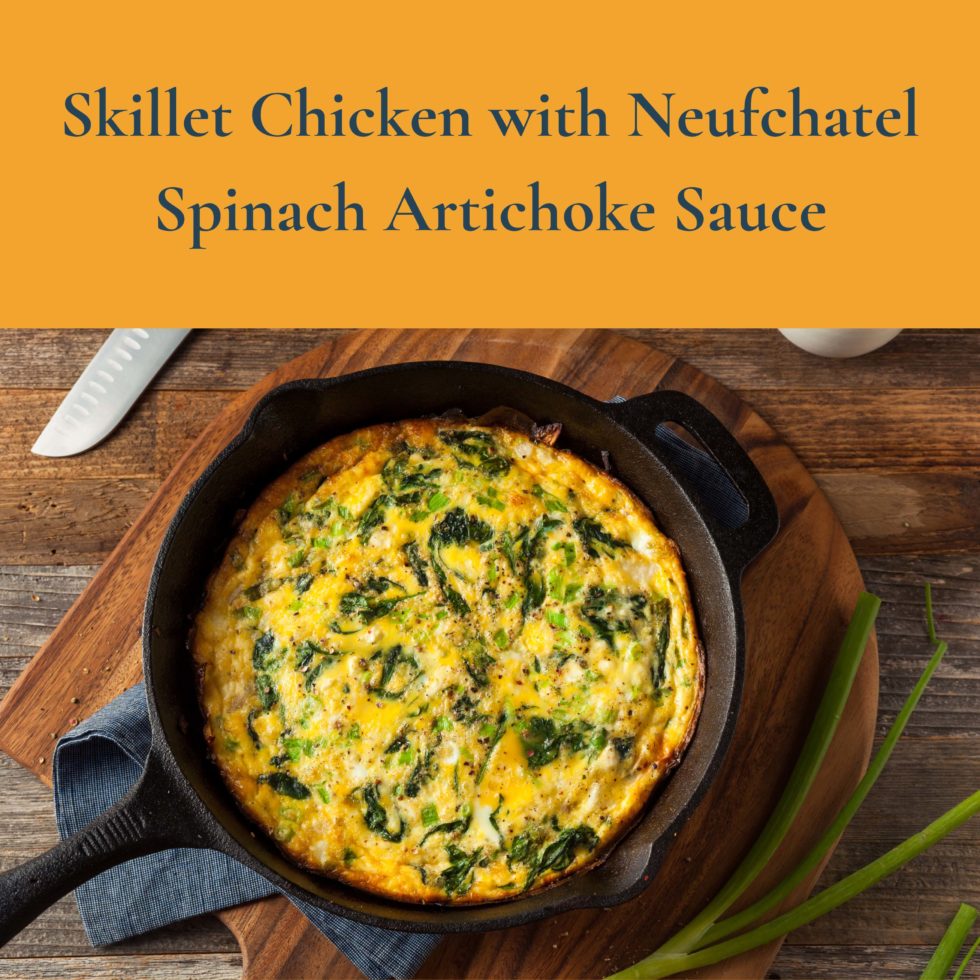
skillet chicken with neufchatel spinach artichoke sauceSkillet Chicken with Neufchatel Spinach Artichoke Sauce: Neufchatel is a french cheese typically made from the unpasteurized milk of Normande cows. You just can’t go wrong with skillet chicken and a good Neufchatel cheese sauce!

Perfectly golden brown, tender pan seared chicken breasts are topped with an easy to make, rich and flavorful spinach artichoke sauce. It might remind you of my crab and artichoke dip recipe but much lighter.

home made yogurtHome Made Yogurt: I make mine in my Corsori multi-function pressure cooker. It has a yogurt setting. I believe it would be similar with the Instant Pot or any other multi-function pressure cooker with a yogurt setting. You don’t have to have one. I also have a rather inexpensive yogurt maker. The reason I no longer use it has to do with how much yogurt I make in one batch. The small, inexpensive yogurt maker works for a quart or two. But I make a gallon and a half at a time now. Yogurt will last a very long time in the refrigerator.

instant pot quailInstant Pot Quail: The reason that I go for the Instant Pot Quail rather than oven roasted quail is the heat. It is really hot outside and to roast quail requires a 500-degree oven. That’s right 500 degrees. The roasting time is short but just the thought of preheating an oven to 500 degrees makes me sweat.

Weston A Price Diet Basics

Today I’m going over the Weston A Price Diet Basics. They champion raw milk and have a lot of great information on their website. I’ll put a link in the show notes to their website.

Before I launch in to today’s info, I want to take a minute to say welcome to all the new listeners and welcome back to you veteran homestead-loving regulars who stop by the FarmCast every week. I appreciate you all so much. I’m so excited to share with you what’s going on at the farm this week.

Today’s Show

  • Homestead Life Updates
  • Weston A Price Diet Basics
  • Bone Broth Recipe

Homestead Life Updates

I feel almost normal again. There was one small incident earlier this week. We are missing one small buck and I thought he might be in with the girls so I walked much farther out into the pasture than normal to round up the goats. It’s pretty easy to do but required a bit more energy that I anticipated. I walked slowly and carefully. Keeping good balance is still an issue. I’m very careful when walking around out there. So many things can trip you up if you are not paying close attention. Then, oops, trip and down you go. Fortunately, I did not have that experience. No, I just walked slowly and carefully. Unfortunately, I walked a lot farther than I had in quite a while. It seemed like it would be easy. After all, I often easily walked two or three times as far as I did on this morning prior to my bout of appendicitis. Well, turns out it wasn’t that easy. I continue to be surprised by how weak my body became with this illness. Oh well, I just went inside, cooled off, rested . . . and then made some cheese.

The Garden and Orchard

Both are showing the effects of a lack of rain this summer. Oh, and the steers ate the tops of my celery, sweet potatoes and the Swiss chard. Bummer, I was going to take the celery to the farmer’s market per the request of my customers. The sweet potatoes will likely be fine. In fact, the tubers may grow even larger as they are the propagation mechanism for the plant. Whenever a plant’s life is threatened, it begins to put a lot of energy into reproduction. For instance, when it gets to hot for lettuce and spinach in late spring, the plants will send up stalks of seeds. This is referred to as “bolting”. We say the lettuce or spinach “bolted”. Sometimes even the smallest amount of stress can cause lettuce and spinach to bolt. It starts putting out as many seeds as possible to preserve itself.

Scott did take a day out of this creamery-building schedule to water the few remaining veggies in the garden and the entire orchard. He also did a bit of summer pruning of the trees. And then it was back to laying blocks in the creamery.

The Creamery

It is so exciting to see those walls growing out of the ground. The building is really taking shape. Scott is so dedicated to using every possible minute to get the project completed. His attention to detail is also inspiring. The seams between the blocks are perfectly aligned. Visit our Facebook page to see images of all his hard work.

The Animals

We started the culling process with the goats. I talked about our plan in the podcast just prior to this one. In the end, we will have no sheep and the cashmere goats will be replaced with Kiko goats. We took the three breeding bucks to the meat processor. They will make lots of ground chev. Look for a good deal on soup bones. We will have lots of them.

All three of them had impressive racks of horns. Roanoke’s were more than 4’ feet from tip to tip. We asked and were granted permission to keep the heads with the horns attached. They are currently curing and will eventually decorate our walls – probably in the small store area of the creamery.

The Quail

We have begun collecting eggs for the next batch of quail. It started slow. Only two so far.

The quail cages got moved. Their manure smell is quite pungent and their cages were far too close to the carport and back door. The odor seemed to accumulate under the carport and came wafting to the back door.

Each time the quail are disturbed, they stop laying eggs for a few days. When Scott was building the cages, he had to remove the layers from their cages while he assembled the additional cage above their space. They stopped for a day or so and then slowly returned to their original laying pattern. So when Scott moved their cage to a new and quite lovely shady spot, their laying dropped to almost nothing. He brought in two eggs this morning. Normally, we get six to eight. Also, the days are getting shorter and the birds will naturally lay fewer eggs. They need light to lay every day. We can supply artificial light and we may do that. Who knows? That’s another project though. Best keep on with the creamery.

Weston Price Diet Basics

Today I want to talk about a traditional diet as presented by the Weston A Price Foundation. (WAPF). There are lots and lots of ideas and opinions about nutrition out there. The science cannot seem to agree. And it makes sense. No two people are alike. Some people live on the equator with ancestral and genetic ties to an abundance of fruits. Some people live in areas where meat and fat are their only choices. I recommend doing your own research and making your choices based on the needs belonging uniquely to you and your family.

Today, specifically, I’ll be outlining the recommendations detailed by the Weston A Price Foundation. First, some basics on the man and the organization.

Who is Weston Price?

Weston Andrew Valleau Price (September 6, 1870 – January 23, 1948) was a Canadian dentist known primarily for his theories on the relationship between nutrition, dental health, and physical health. He founded the research institute National Dental Association, which became the research section of the American Dental Association, and was the NDA’s chairman from 1914 to 1928.

Price initially did dental research on the relationship between endodontic therapy and pulpless teeth and broader systemic disease, known as focal infection theory, a theory which resulted in many extractions of tonsils and teeth. Focal infection theory fell out of favor in the 1930s and was pushed to the margins of dentistry by the 1950s.

By 1930, Price had shifted his interest to nutrition. In 1939, he published Nutrition and Physical Degeneration, detailing his global travels studying the diets and nutrition of various cultures. The book concludes that aspects of a modern Western diet (particularly flour, sugar, and modern processed vegetable fats) cause nutritional deficiencies that are a cause of many dental issues and health problems. The dental issues he observed include the proper development of the facial structure (to avoid overcrowding of the teeth) in addition to dental caries. This work received mixed reviews, and continues to be cited today by proponents of many different theories, including controversial dental and nutritional theories.

The Weston A Price Foundation

The Weston A. Price Foundation (WAPF) was co-founded in 1999 by Sally Fallon Morell and nutritionist Mary G. Enig. It is a non-profit organization dedicated to “restoring nutrient-dense foods to the American diet through education, research and activism.”

The foundation has been criticized by the U.S. Food and Drug Administration (FDA) for its advocacy of drinking raw milk and by various nutritionists for its advocacy of the health benefits of animal-based fats.

The President of the foundation is Sally Fallon Morell. The foundation has seven board members and numerous honorary board members, most of whom have medical or nutritional qualifications. 

Its main sources of support are the dues and contributions of its members. It does not receive funding from the government or the food processing and agribusiness industries. It does accept sponsorships, exhibitors and advertising from small companies by invitation, whose products are in line with its principles. The sponsors include grass-fed meat and wild fish producers, as well as health product companies.

A 2004 report published by the foundation stated that it is dedicated to “restoring nutrient-dense foods to the American diet through education, research and activism”, and “supports a number of movements that contribute to this objective including accurate nutrition instruction, organic and biodynamic farming, pasture feeding of livestock, community-supported farms, honest and informative labeling, prepared parenting and nurturing therapies.”

Specific goals include establishment of universal access to certified raw milk and a ban on the use of soy in infant formulas. The organization actively lobbies in Washington DC on issues such as government dietary guidelines definition and composition of school lunch programs.

The WAPF publishes a quarterly journal called Wise Traditions in Food, Farming, and the Healing Arts, and an annual shopping guide which lists products made from organic, non-GMO ingredients and prepared using traditional and artisan methods.

WAPF Diet Basics

The diets of healthy primitive and non-industrialized peoples contain no refined or denatured foods such as refined sugar or corn syrup; white flour; canned foods; pasteurized, homogenized, skim or low-fat milk; refined or hydrogenated vegetable oils; protein powders; artificial vitamins or toxic additives and colorings.

I do want to point out that primitive cultures have health difficulties that our modern systems have overcome. Access to food and health care in the first world is amazing. Death in childbirth and early childhood death from things like pneumonia are still issues for the primitive tribes. Diet won’t fix that. Appendicitis like I had would have been a death sentence for these people without modern medicine. We truck food from one side of the country to the other. Importing and exporting food from and to all parts of the world is now commonplace. We do not have problems with access to food. Our problems might be characterized more as excess of food.

All traditional cultures consume some sort of animal protein and fat from fish and other seafood; water and land fowl; land animals; eggs; milk and milk products; reptiles; and insects.

In every traditional culture, some of the animal products are eaten raw.

Their location on the planet determines their diet. And as I mentioned earlier, some have access to an abundance of fresh fruit. For some fruit would be a year-round staple and for other it would be seasonal.

Because of the focus on the foods I just mentioned, primitive diets contain at least four times the calcium and other minerals and TEN times the fat soluble vitamins from animal fats (vitamin A, vitamin D and vitamin K2) as the average American diet.

There is an interesting connection between raw foods and the enzymes needed to digest them. Primitive and traditional diets have a high food-enzyme content from raw dairy products, raw meat and fish; raw honey; tropical fruits; cold-pressed oils; wine and unpasteurized beer; and naturally preserved, lacto-fermented vegetables, fruits, beverages, meats and condiments. Lacto-fermenting is an art form I’ll address for you in a later podcast.

Seeds, grains and nuts are soaked, sprouted, fermented or naturally leavened in order to neutralize their naturally occurring antinutrients. Phytic acid, enzyme inhibitors, tannins and complex carbohydrates are examples of antinutrients.

Most of today’s nutritionists insist that low fat is the way to go. But that’s not how we were able to survive to experience this modern era. The total fat content of traditional diets varies from 30% to 80%. Of total calories consumed, only about 4% come from polyunsaturated oils. That 4% comes from the naturally occurring oils in grains, pulses, nuts, fish, animal fats and vegetables. The balance of fat calories is in the form of saturated and monounsaturated fatty acids.

Traditional diets contain nearly equal amounts of omega-6 and omega-3 essential fatty acids. There is a lot of heady information out there about what food has what fat and in what ratio? Is there a balance of equal parts omega-6 and omega-3? Again, in traditional diets where animals are raised in harmony with nature and gardens are made fertile with naturally occurring compost, the balance of this fat and that fat is irrelevant. When using traditional methods of farming, the animals are healthy and the nutrition in food is naturally in balance. If it is not, something needs to change in the farming method. This is the essence of being sustainable. 

All primitive diets contain some salt. Another vilified nutrient by today’s standards.

Traditional cultures consume animal bones, usually in the form of gelatin-rich bone broths. Bone broth is quite popular today in the keto and carnivore diet worlds.

That sums up the basics of the WAPF diet basics. Go to their website and signup for their 7-part Wise Traditions Diet to get all the information on eating a traditional diet. What to eat as well as proper preparation passed down through centuries of experience. 

Bone Broth

Bone broth is made with bones that have bits of meat still clinging unlike “stock”. It is also generally thinner than “stock”. Most people use the terms interchangeably. It has been made for centuries. Roasted bones will add flavor to the broth and will darken the color.

This recipe that fresh herbs for an added bit of flavor.

What You Need

  • 1 pound lamb bones or other bone of our choice
  • 1 tablespoon cooking oil
  • 1 large onion, diced
  • 3 medium carrots, chunked
  • 3 stalks celery, chopped
  • 3 sprigs fresh rosemary 
  • 5 sprigs fresh thyme 
  • 3 gallons water, more as needed
  • Salt, optional

What To Do

  1. Preheat oven to 400 F.
  2. Place bones in roasting pan. Cook for 30-40 minutes or until browned.
  3. In a large stock pot placed over medium heat, add cooking oil.
  4. Add onion, carrot, celery, garlic, and herbs. Saute for 5 minutes.
  5. Add bones including fat and juices from the roasting pan.
  6. Add enough water to cover the bones and bring it to a simmer. Reduce the heat to low.
  7. Simmer for 8 hours (or up to 24 hours) uncovered. Add more water as needed to keep the bones covered.
  8. Strain the broth through a fine mesh strainer lined with a tea towel.
  9. Enjoy hot or store in the refrigerator for up to a week.

Notes

If you made a larger amount, freeze the remaining broth in container sizes that fit your everyday needs or pressure can for longer term storage.

Hop over to the website to find and print this recipe. There is a link in the show notes. Go to the home page, click or tap podcasts, click or tap this episode titled “Weston A Price Diet Basics,” scroll to the bottom of the post and you will find the link to the bone broth recipe.

Final Thoughts

That’s it for this episode of the Peaceful Heart FarmCast. We are winding down toward fall, the harvests are coming in and preserving food for the winter is in full swing here on the homestead. The work on the creamery continues. And as the days get cooler, that bone broth is the perfect food for bringing you warmth and peace at the end of the day.

If you enjoyed this podcast, please hop over to Apple Podcasts, SUBSCRIBE and give it a 5-star rating and review. And the best way to help out the show is to share it with any friends or family who might be interested in this type of content.

As always, I’m here to help you “taste the traditional touch.”

Thank you so much for stopping by the homestead and until next time, may God fill your life with grace and peace.

References

Weston A Price Foundation

Recipe Link

Bone Broth

To share your thoughts:

  • Leave a comment on our Facebook Page
  • Share this show on Twitter, Facebook and Instagram

To help the show:

Website

www.peacefulheartfarm.com

Patreon

www.patreon.com/peacefulheartfarm

Facebook

www.facebook.com/peacefulheartfarm

Instagram

www.instagram.com/peacefulheartfarm/

This Week at Peaceful Heart Farm: 9/12/19

Hello beautiful people,

Will it ever rain? It has been so long. Perhaps you have had some rain recently. Maybe even some hurricane weather. My heart goes out to those that are still recovering from hurricane Dorian. I have friends and family that were in the path of that storm. All of them are well. I hope you and yours are also. 

We have some wonderful cheese available via herd share. Our Ararat Legend cheese is wonderful. It has a medium sharp flavor when aged, a semi-firm texture and melts well for those grilled cheese sandwiches. I will have some Ararat Legend for tasting at the both Farmer’s Markets and the opportunity to sign up for our herd share program. Yogurt will also be available for tasting. Last week I had a customer who doesn’t really like yogurt try mine and she loved it. Just sayin. . .  

Still waiting on the Clau d’ ville Cheddar. Sometimes it’s hard to wait but it is necessary fro cheese. It is still barely over 3 months of aging and very mild. To be really excellent it needs at least six months and preferably more. We gave it a taste test and, sure enough, it needs more time.  

I’ll have ground goat (chev) meat at the farmer’s market. If you haven’t tried this wonderful meet, you are missing out. It is by far my favorite ground meat for making burgers.  

Send me an email with your desire to participate as a herd share owner or if you have questions.  

Please go HERE to learn all about it,

Download the jar cleaning protocol and FAQs.


News This Week


Products Available to Herd Share Owners

Choose 1 per week 1/2 Share Whole Share
Whole Milk 1/2 gal 1 gallon
Skim/Low-Fat Milk 1/2 gal 1 gallon
Full Fat Yogurt 1 quart 2 quarts
Butter 1/2 pound 1 pound
Cream 1/2 pint 1 pint
Ararat Legend 1/4 pound 1/2 pound

Products Available to the General Public

Beef Price / Pound
1/4 Beef (approx 100 lbs) $7.00
1/2 Beef (approx 200 lbs) $6.50
Whole Beef (approx 400 lbs) $6.00
Ground (approx 1 lb) $7.00
Marrow Bones (approx 2 lbs) $2.00
Lamb Price / Pound
1/2 Lamb (approx 20 lbs) $10
Whole Lamb (approx 40 lbs) $9.50
Ground Lamb (approx 1 lb) $10
Lamb Soup Bones (approx 1 lb) $3
Chev (Goat) Price / Pound
Ground Chev (approx 1 lb) $12
Meaty Goat Bones (approx 1 lb) $3
Meaty Goat Bones (approx 10 lb) Ask about discount

Let’s Get Together

As always, we’d love to meet you in person. Come see us at the Independence Farmer’s Market on Friday or the Wytheville Farmer’s Market on Saturday. We can talk about Herd shares and I will have the required documents at hand so you can sign up right away. 

Visit our dairy farm in Claudville, Virginia Tuesdays from 10 am to 12 noon and Saturday afternoons from 3 pm to 5 pm. Come visit us in person, find out how we raise our animals and why you will love the taste of tradition that is inherent in all of our products. Herd share holders will be able to see up close how their cows are cared for and where the cheese is made and stored. 


Peaceful Heart FarmCast

This week’s podcast revolves around what we have discovered about the differences between our Normande milk cows and the Jersey milk cow. The Jersey cow is by far the most popular breed for homesteaders and small scale farmers who have milk cows. For us, the Normande is the bomb, but we decided to give the Jersey a try to see what all the fuss is about. We are changing our milking operation based on we found out.  

Listen to “Normande vs Jersey – the Cost” here.


Free Downloads

I want to follow up on a previous FarmCast, The Taste of Cheese where I talked about developing your expertise with using descriptive words. The FREE downloads of Classifying Cheese by Type and Category and Expand Your Cheese Vocabulary are still available at our website. Please stop by and get your FREE resources. 

You can LISTEN TO THE PODCAST HEREOr, if you have an Alexa device, just say:Alexa, play podcast Peaceful Heart FarmCast.

And don’t miss an episode! Subscribe to the Peaceful Heart Farm podcast on Apple PodcastsAndroidTuneIn, Stitcher or Spotify


Recent Recipes

Click the links and check them out. All of my recipes are printable.

skillet chicken with neufchatel spinach artichoke sauceSkillet Chicken with Neufchatel Spinach Artichoke Sauce: Neufchatel is a french cheese typically made from the unpasteurized milk of Normande cows. You just can’t go wrong with skillet chicken and a good Neufchatel cheese sauce!

Perfectly golden brown, tender pan seared chicken breasts are topped with an easy to make, rich and flavorful spinach artichoke sauce. It might remind you of my crab and artichoke dip recipe but much lighter.

home made yogurtHome Made Yogurt: I make mine in my Corsori multi-function pressure cooker. It has a yogurt setting. I believe it would be similar with the Instant Pot or any other multi-function pressure cooker with a yogurt setting. You don’t have to have one. I also have a rather inexpensive yogurt maker. The reason I no longer use it has to do with how much yogurt I make in one batch. The small, inexpensive yogurt maker works for a quart or two. But I make a gallon and a half at a time now. Yogurt will last a very long time in the refrigerator.

instant pot quailInstant Pot Quail: The reason that I go for the Instant Pot Quail rather than oven roasted quail is the heat. It is really hot outside and to roast quail requires a 500-degree oven. That’s right 500 degrees. The roasting time is short but just the thought of preheating an oven to 500 degrees makes me sweat.

Ginger TeaGinger Tea with Honey and Lemon: Ginger tea has been used for thousands of years as a cure for nausea and digestive problems. It offers a variety of health benefits and healing compounds to alleviate upset stomach. Many people reach for the ginger ale when feeling symptoms of stomach pain or nausea, but ginger tea contains higher concentrations of the compounds that alleviate these digestive issues; making it the better choice for feeling better faster.

This tea is made using fresh ginger root and packs a punch when it comes to healing symptoms of upset stomach. Ginger is a natural remedy for nausea and is often used to treat morning sickness in pregnant women and motion sickness caused by planes and boats. In fact, a Thai study examined pregnant women with symptoms of morning sickness and found that 28 out of the 32 individuals saw an improvement in nausea when given a daily dose of 1 milligram of ginger root. As a rule of thumb, one cup of ginger tea contains about 250 milligrams of ginger so aim to drink two to four cups of this tea to alleviate feelings of nausea.


Normande vs Jersey — the Cost

We have made some really startling discoveries lately regarding the cost of milking cows and I want to share that with you today. Normande vs Jersey – the cost is the main topic for today. Both are traditional breeds. What’s the difference and how does that affect the cost of raising them. 

Today’s Show

  • Homestead Life Updates
  • Normande vs Jersey – The Cost
  • Skillet Chicken with Neufchatel Spinach Artichoke Sauce

Homestead Life Updates

Life is getting back to normal on the homestead. I’m mending nicely and my energy level is back to where I can work all day and not be too tired. I still have to watch myself in the heat and doing too much in one day. While I’m active all day, I want to be cognizant of the strength and energy required to perform those activities. For instance, I might go to the garden for a little while, but not for the hours and hours I would put in before. I do more inside tasks.

The Garden

Speaking of the garden, putting in less hours is working out well as the garden is winding down. We have finished with the tomatoes. Not because they weren’t producing but because I simply have had enough of tomatoes. I planted way too many. If it weren’t for the drought we have been experiencing, I would have been even more overwhelmed. Most of the season the tomatoes were small due to lack of water and fertilizer. They were very good tomatoes, just not very big. Instead of a nice 3 ½ inch diameter, they were more like 2 ½ inches in diameter. Pretty small I know. But they were really, really good.

The Many Ways of Preserving Tomatoes

I’ve canned and canned and canned. Mostly tomato sauce, though I made a few jars of salsa and really like it. I have all of the remaining tomatoes on a shelf inside the house near a window. Those tomatoes will all go into salsa. Barbecue sauce is on the list as well. That concoction is just about ready to be canned. Even though I am using a traditional recipe it calls for more sugar than I want. I can leave out some of the sugar and start my own traditional barbeque sauce line as a much healthier product. IMO

Animal Husbandry

The animals are doing really well. We had a long discussion about where we are going to go with our animals. We currently have sheep, goats, cows, and donkeys. Which do we want to keep and which will go? We haven’t talked much about the donkeys, though we have discussed selling two of them as we don’t need that many. And after I talk about the sheep, we may not need any at all. That is another discussion.

The Sheep

Currently we have one breeding ram and 6 ewes. This year that combination produced 10 lambs that will go to market next year. We also have three lambs that are ready for market right now. Get your orders in now if you want a half or whole lamb. Again, there are only three.

We had a good long discussion about the sheep a few days ago. They are wonderful animals and very easy to keep and manage. The flock has been genetically improved so they have little to no problems with parasites. That was a big problem for us in the beginning. We lost many animals – especially small lambs – in the first year or two.

The discussion revolved around time management. While they are easy to keep and raise, they also are one more marketing task that we have to take on to sell the lambs and meat each year. In our neck of the woods, lamb is actually quite popular. However, every minute I spend marketing lamb is a minute I don’t spend marketing cheese. These are business decisions that have to be considered.

In the end, we decided to phase out our flock of sheep. We will not breed this year and will begin culling the older ewes a little at a time. Likely we will sell the breeding ram, but in the end, all sheep will be gone from our homestead. At least for the time being. We can revisit this after the creamery is completed and we have a good handle on making and marketing our cheese. For right now, the creamery, cheesemaking and marketing are our primary focus.

The Purpose of Goats

Unlike the sheep, the goats have a greater role to play in the maintenance of good pasture for our grass-fed operation. Sheep do eat different things than cows initially, but in the end, they both eat all of the grasses. The goats, on the other hand, like to eat woody stems such as small trees, briars, brambles, wild blackberries and so on. But still there will be changes. Again, relating to efficient time management on the homestead.

We chose cashmere goats because I love to knit. It was a great idea to raise them, comb out the cashmere, then send it off to be processed and spun into roving and yarn. Then I was going to knit cute little baby stuff to sell at the market. In the end, I simply don’t have that kind of time. There is only so much I can do. This is a great life lesson. You can divide your focus between two things, but neither will ever get your full attention.

The goats require constant hoof maintenance. The cashmere must be combed out at exactly the right time in late winter. There is a pre-cleaning that happens before sending it off to be cleaned, carded and made into roving and/or yarn. I once thought that I would have lots of time in the winter to sit and knit to my heart’s content. Didn’t happen.

I spend a great deal of time in the winter laying out the marketing plans for the spring, summer and fall. Because once spring has sprung, everything else goes on hold. Cows are being milked, cheese is being made, and trips to the farmer’s market are happening a couple of times a week. I better have all of my marketing ducks in a row before the dam bursts.

What To Do With Our Goats

Back to the goats. We will still have a herd of goats. However, we are going to cull out all of the cashmere goats and eventually bring in some Kiko goats. Kikos were developed in New Zealand based on the needs of the local markets. They needed goats that did not require a lot of parasite control and certainly did not need hoof maintenance. Taking a feral breed and crossing it with domestic breeds, they were able to develop a great meat goat that requires little to no maintenance. That’s our kind of animal. We still have to sell the goat meat, but we will keep the herd small.

We haven’t managed our goats nearly as well as the sheep. Unauthorized breeding is an ongoing problem with them. There seem to be goat kids popping out at the most inconvenient times. And of course, it makes the herd bigger when we don’t take the time to get them to market. Unlike the Kiko goat which was developed for efficient meat production, the cashmere goats take a long time to get to a good size for market. They are bred for their winter undercoat of cashmere with no regard for any other trait.

The Donkeys

As I mentioned, we haven’t discussed the donkeys and whether we will continue to keep them after the sheep are gone. They were purchased as livestock guardian animals for the sheep. They are also the only thing on the homestead that could properly be called a pet. They are very friendly animals and they crave human interaction.

Likely we will keep them around. We want you guys to come visit us and I wouldn’t want you to miss them. AAANNNDDD I would miss them too.

The Cows

Finally, I get to the cows and this will lead into today’s topic. In fact, I’m going to skip right to the topic.

Normande vs Jersey Cows – the Cost Analysis

First, a short review of our choice for the Normande breed of cow. Second, how did we end up with a Jersey cow and heifer calf? Lastly, how has this experience changed the way we think about our herd?

Why We Chose Normande Cows?

I know you’ve heard me say this before, but I’ll say it again. I love our Normande cows. For more particulars about the breed, listen to my podcast “Why Normande Cows”. We bought our first girls in the fall of 2011. There was never any doubt in my mind that I would have a milk cow on our homestead. Making cheese, butter and yogurt along with that luscious fresh milk straight from the cow was on the top of my list of things I wanted in my life.

We had plenty of time to research what kind of cow we wanted to have for our traditional family cow. As mentioned above, there are always offspring to deal with when raising animals. In order for a cow to produce milk, she needs to have a calf every year. She will produce milk for about a year before naturally drying up, but proper management requires us to stop milking her and “dry her off” a good three months before she gives birth again. That gives her the resources she needs to remain healthy and grow a healthy calf. So what kind of cow was going to give us a good calf for beef as well as produce a lot of milk for my enjoyment, cheesemaking and so on?

Dual Breed Cows

There are quite a few breeds that are listed as “dual breed”, meaning they produce lots of milk but also produce calves that grow out with well-marbled meat in a timely manner. Another requirement we had was a good healthy steer that could thrive on pasture and did not need to be grain finished to reach that well-marbled meat in a timely manner goal. Same for the milk. She needs to be able to maintain her weight and condition without being fed the customary 6 pounds of grain a day allowed for organic grass-fed dairies. Commercial dairies will feed their cows up to 30 pounds of grain per day.

The trade off with not feeding grain is less milk. Grain definitely increases milk production. And while I am not opposed to feeding the 6 pounds of non-gmo, non-soy feed, if we need more production, our current model does not require this. Let me explain a little more.

My first concern is the health of the cow. I’ve seen some pretty skinny milk cows. They were being pasture raised with absolutely no grain. It’s a fine goal, but if your cow is starving because so much of her energy is going into milk production that there is little left for her own needs, the goal is flawed. I prefer a system approach.

My system is designed to keep healthy herd, produce enough milk for us to make our traditional, hand-made artisan cheese in sufficient quantity to support the homestead, and produce excellent beef, breeding and replacement stock with the annual calving.

There are several breeds that advertise themselves as fitting those requirements. But the Normande stood out in my mind. Their milk production is on par with the Jersey. The fat and protein components are on par with the Jersey. The largest deciding factor was the composition of the milk as it relates to cheesemaking.

Normande Cow Characteristics

The Normande cow produces a milk with a protein structure that is the most conducive to cheesemaking. In France, Normande milk is prized and even required for some cheeses to carry a specific name. Camembert di Normande comes to mind. Neufchâtel is also made with milk from Normande cows. Neufchatel is a traditional, soft-white, table cheese, originating from the village of Neufchatel-en-Bray in northern Normandy. It is one of France’s oldest cheese, dating back as far as 1035. Often, it is heart-shaped. That shape came about during the Hundred Years’ War between England and France from 1337 to 1453. Tales are told about the French farm girls falling in love with English soldiers and making these heart-shaped cheese to show their love.

One other characteristic we considered was docility. Cows are very large animals. I wanted a breed that was gentle and easy to work with and the Normande has exceeded my expectations in that area. Far exceeded my expectations.

We love our Normandes so how did we come to own a couple of Jerseys?

Why Did We Buy a Jersey Cow?

I often referred to Jersey cows when talking about the Normande and other dairy breeds. It is the most popular choice for a family milk cow. Typically, they produce lots and lots of milk with higher butterfat and protein levels than other breeds. They are not, however, a dual breed. They are actually quite skinny in their natural state. Boney in fact. While our Normandes are flat across their rump with meat and fat, the Jersey cow’s hip bones are really prominent. It is how they are genetically built. Their energy primarily goes into making milk, not meat and fat.

Jersey milk is highly prized for the highest butter fat content. That means you can make lots of butter. Cheese made from Jersey milk will also be higher in fat, and that means more flavor. They are a great milk cow. But again, not a dual breed. Though I do see a lot of marketing going on right now for Jersey beef. And I assure you, that it is only marketing.  It is marketing with information put together by the American Jersey Cattle Association researchers. The studies they are conducting include the standard grain diet fed to beef cattle to grow out the Jersey steers. They are simply not going to get the proper level of fat on grass only. I think it might work for the commercial market, but would not be viable for the family homestead. I’m willing to change my mind if I’m wrong. Right now, my mind says that Jerseys are NOT a dual breed.

So how did we end up with a bred Jersey cow? We needed some cash flow and herd shares were one way to provide it. A combination of the A2A2 certification of this cow and her calf along with the possibility of an existing customer base tipped the scale.

When I was first approached, I simply wasn’t interested in another cow – and a Jersey to boot. But the idea of offering herd shares was intriguing. After a few days and lots of discussion, Scott and I decided to give it a try. It was a big financial risk but we decided to take the plunge. The current owner was offering herd shares and some of her customers would likely come to us after she stopped offering the service. That would help offset the initial cost of the cow. Additionally, I felt I could work it into my already busy marketing schedule as the herd shares contributed to our cheese centerpiece. Yes, we offer the fresh raw milk, but we also provide cheese, yogurt and butter to our herd share owners.

Fast forward, Butter has her calf. A very beautiful deer-like heifer. Very boney and much smaller than our Normande calves. That’s just how they come. We started milking Butter and offering fresh A2A2 milk via our herd shares. The legal contracts are worded to include cheese, butter, yogurt and cream as part of the herd production.

Here’s What We Found Out – the Good News

The A2A2 milk is the real draw for both the milk and the cheese. We are in the process of getting our Normande cows tested for the A2A2 beta casein genetic trait. For more info on that, listen to my podcast, “What is A2A2 Milk?” Link in the show description. We are moving our herd genetics to 100% A2A2 beta casein and BB kappa casein. I haven’t talked about kappa casein yet. BB kappa casein is the genetic quality that makes the best cheese. That need its own podcast.

Here’s What We Found Out – the Bad News

First, the docility factor. Jerseys, and indeed most dairy cows, are fairly placid. What I see is that they are placid with humans. The Jersey cows are very aggressive with the other cows. Even Egwene, Butter’s calf, is aggressive with her bottle. She pushes and jerks on that bottle with ferocity. It’s not a problem for us at all. Just noted. As I said, the Jersey cows are very placid with humans.

Second, that Jersey does produce some really good milk and cream. She also requires feed – expensive feed. While our Normande cows stay fat and healthy on pure grass, even when they are in milk, a Jersey requires feed to maintain body condition when in milk. We feed a little bit of a supplement to our Normandes purely to keep them interested in coming into the milking parlor. Violet in particular is quite fat and she never received any grain supplement until this year when we trained her to put her head into the milking stanchion. The Normande breed has been developed over centuries to thrive on a grass-based diet.

Because we keep Butter’s milk separate so our herd share owners can have 100% A2A2 milk, we are able to keep track of which cow is giving how much milk. The results are in. Butter is getting about four pounds or so of non-gmo, non-soy dairy feed supplement. Her milking parlor mate, Violet, gets about two handfuls of sweet feed. Violet produces as much or more milk than Butter. That’s right. As much and sometimes more milk from Violet without the expense of lots of special feed. I believe that Butter is quite capable of producing quite a bit more milk than Violet. However, we would have to feed her more grain to accomplish it. We don’t need a lot of milk at this time. The herd shares are still building and I’m only making cheese intermittently due to limitations of aging space. We simply don’t need the extra milk. 

If you run a Jersey dairy, it’s probably worth the cost to have more milk. But for us, why spend the money if you don’t have to? If we wanted more milk production from our Normandes, we could feed them a dairy supplement. Who knows how much milk they would produce? I do know that the little bit of feed they do get increases their milk production significantly. And perhaps at some time in the future that will be the way to go. As our cheese business takes off, we may want to make more cheese than the original plan outlined. We may have many more herd shares available in the future. In that case, we may feed some grain to produce more milk. But for right now, the grass requires no cash flow. It’s free. 

Where Do We Go From Here?

The bottom line is we are going to phase out the Jerseys. As soon as I can get at least one of my Normande cows certified as having A2A2 genetics, Butter goes up for sale. We are already talking about selling her calf, Egwene. Perhaps we will wait until we can sell her as a bred heifer. We shall see. In the end, the Normande ladies rule.

Skillet Chicken with Neufchatel Spinach Artichoke Sauce

You just can’t go wrong with skillet chicken and a good cheese sauce!

Perfectly golden brown, tender pan seared chicken breasts are topped with an easy to make, rich and flavorful spinach artichoke sauce. It might remind you of my crab and artichoke dip recipe but much lighter. Recipe link in the show notes.

What You Need

  • 24 oz boneless, skinless chicken breasts
  • Salt and black pepper
  • 4 Tbsp butter, divided
  • 3 cloves garlic, minced
  • 1 Tbsp flour
  • 3 ½ cups fresh baby spinach, chopped
  • 1 (14 oz) can artichoke quarters, drained and chopped
  • 1 ¼ cups milk
  • 4 oz Neufchatel cheese, diced into small cubes
  • 1/3 cup finely shredded parmesan cheese
  • ¼ cup sour cream

What To Do

  1. Pound chicken to an even thickness using the flat side of a meat mallet. Season both sides with salt and pepper. 
  2. Heat 2 Tbsp butter in a large skillet over medium-high heat. Add chicken and cook until golden brown on bottom, about 5 – 6 minutes. 
  3. Turn chicken to opposite side. Continue cooking until chicken is golden brown on bottom or center registers 165 on an instant read thermometer, about 5 minutes longer. Transfer chicken to a plate, cover and keep warm.
  4. Melt remaining 2 Tbsp butter in skillet over medium heat. Add garlic and flour and cook 30 seconds then add in spinach and artichokes and sauté about 1 minute or until spinach has wilted.
  5. Pour in milk and scrape up browned bits from bottom. 
  6. Add in Neufchatel cheese and parmesan, season with salt and pepper to taste, and cook and stir until mixture has thickened slightly and cheeses have melted. 
  7. Stir in sour cream then return chicken to skillet.

Quick and easy, this recipe serves 4. Give yourself 15 minutes to prep the ingredients and about 18 minutes for cooking. In just about 33 minutes you’ve created a masterpiece.

Final Thoughts

We gave the Jersey breed a chance and ended up back in the same place we started. Normande is the breed for us. I hope you get a chance to visit the farm sometime in the near future. See these beautiful creatures close up and personal. And you’ll want to pet the donkeys as well.

We love the homestead life. There is always something new coming along. The variety and number of animals may change according to our needs, but they will always be a central part of our life. Especially the milk cows. They are such peaceful creatures. And our traditional breed Normandes exemplify peace.

Neufchatel cheese originated in Normandy, France. It’s a fantastic cheese. And even though the US version of it is a bit watered-down and rectangular rather than heart-shaped, give that skillet chicken with spinach artichoke sauce a try. You’ll be glad you did.

If you enjoyed this podcast, please hop over to Apple Podcasts, SUBSCRIBE and give me a 5-star rating and review. Also, please share it with any friends or family who might be interested in this type of content.

As always, I’m here to help you “taste the traditional touch.”

Thank you so much for stopping by the homestead and until next time, may God fill your life with grace and peace.

Recipe Link

Skillet Chicken with Neufchatel Spinach Artichoke Sauce

To share your thoughts:

  • Leave a comment on our Facebook Page
  • Share this show on Twitter, Facebook and Instagram

To help the show:

Website

www.peacefulheartfarm.com

Patreon

www.patreon.com/peacefulheartfarm

Facebook

www.facebook.com/peacefulheartfarm

Instagram

www.instagram.com/peacefulheartfarm/

Skillet Chicken with Neufchatel Spinach Artichoke Sauce

Quick and easy, this recipe serves 4. Give yourself 15 minutes to prep the ingredients and about 18 minutes for cooking. In just about 33 minutes you’ve created a masterpiece.

Skillet Chicken with Neufchatel Spinach Artichoke Sauce

You just can’t go wrong with skillet chicken and a good cheese sauce! Perfectly golden brown, tender pan seared chicken breasts are topped with an easy to make, rich and flavorful spinach artichoke sauce. It might remind you of my crab and artichoke dip recipe but much lighter.
Prep Time15 minutes
Cook Time18 minutes
Total Time33 minutes
Course: Hot Entrée
Cuisine: American
Servings: 4

Ingredients

  • 24 oz boneless skinless chicken breasts
  • Salt and black pepper
  • 4 Tbsp butter divided
  • 3 cloves garlic minced
  • 1 Tbsp flour
  • 3 ½ cups fresh baby spinach chopped
  • 1 (14 ocan artichoke quarters drained and chopped
  • 1 ¼ cups milk
  • 4 oz Neufchatel cheese diced into small cubes
  • 1/3 cup finely shredded parmesan cheese
  • ¼ cup sour cream

Instructions

  • Pound chicken to an even thickness using the flat side of a meat mallet. Season both sides with salt and pepper.
  • Heat 2 Tbsp butter in a large skillet over medium-high heat. Add chicken and cook until golden brown on bottom, about 5 – 6 minutes.
  • Turn chicken to opposite side. Continue cooking until chicken is golden brown on bottom or center registers 165 on an instant read thermometer, about 5 minutes longer. Transfer chicken to a plate, cover and keep warm.
  • Melt remaining 2 Tbsp butter in skillet over medium heat. Add garlic and flour and cook 30 seconds then add in spinach and artichokes and sauté about 1 minute or until spinach has wilted.
  • Pour in milk and scrape up browned bits from bottom.
  • Add in Neufchatel cheese and parmesan, season with salt and pepper to taste, and cook and stir until mixture has thickened slightly and cheeses have melted.
  • Stir in sour cream then return chicken to skillet.

You found our farm!

}

FARM STORE HOURS:

Tuesday and Wednesday:  10am – 12pm
Tuesday:  4pm – 6pm
Saturday:  by appointment

Peaceful Heart Farm

224 Cox Ridge Road, Claudville, VA 24076

Can you find our products?

We'd like to make sure we have cheese available where you can get it. Whether it be at the Farmers Market or a specialty food store.

Let us know where you'd like to see us and we'll try to make it happen. We'll notify you via email when we get our products to your favorite shopping destination.

5 + 3 =

}

FARM STORE HOURS:

Tuesday and Wednesday:  10am – 12pm
Tuesday:  4pm – 6pm

Saturday:  by appointment

}

Independence Farmers Market:

Fridays:  9am – 1pm (May thru October)
Fridays: 11am - 12pm (October thru April)

Never Miss an Update:

We're crafting cheese. Just for YOU!

0

Your Cart