This Week at Peaceful Heart Farm: 1/8/2020

Hello beautiful people,

Happy New Year. Hope all is going well for all of you. Time has slowed tremendously here on the farm. It’s a welcome break from the high speed activity that goes on the rest of the year.

Scott is diligently working on the creamery. If you are not following us on our Facebook page, you are missing the great photos of his progress on this project. You can follow us HERE. The rafters are going up. The roof is being raised. 

Cow breeding is done and birthing will begin in less than 3 months. It’s the cycle of life. Not much else is happening here on the farm. The animals are all eating lots and lots of hay as the grass is just about gone.  

If you have not heard from me regarding available herd shares, I do not have you on my waiting list. I have one and a half shares available. Contact me via email (melanie@peacefulheartfarm.com) or phone (276-694-4369). I will have more shares available in the spring.

Please go HERE to learn all about Herd Shares and get on our waiting list.

This week I’m going to have samples of our ground lamb in the form of meatballs. Stop by our booth and have a taste. We have lamb chops and beef available as well. All purchases come with a free recipe and I have two new lamb recipes.

Herd share owners I hope you are enjoying the cheese. And before you know it, we will once again have fresh milk and fresh milk products. 

As a reminder, those of you that shop the Independence Farmer’s Market can still place your orders for lamb, beef and goat via the online market. We now have lamb available in 1″ kabob chunks. It’s great for making Indian curry dishes. Indian Style Curry is one of the new recipes. 

Here is a link to the online store. Register for an account, place your order online and pick it up on Wednesday afternoon at Grayson Landscaping (next to the old court house). Email me if you don’t see what you are interested in purchasing. 


News This Week 

  • Products Available This Week
  • Let’s Get Together
  • This week’s FarmCast: “7 Tips for Using a Traditional Slow Cooker” is a great reminder that new gadgets are good but sometimes the old ones will do the trick nicely. Included is a great recipe for using chuck roast in the slow cooker to make easy barbecued beef. 
  • FREE Cheese tasting downloads
  • Most Recent Recipes – Easy Barbecued Beef was added.

Products Available to Herd Share Owners

Choose 1 per week 1/2 Share Whole Share
Butter 1/4 pound 1/2 pound
Ararat Legend 1/4 pound 1/2 pound
Peaceful Heart Gold 1/4 pound 1/2 pound
Pinnacle 1/4 pound 1/2 pound
Clau d’ville Cheddar 1/4 pound 1/2 pound

Products Available to the General Public

Beef Price / Pound
1/4 Beef (approx 100 lbs) $7.00
1/2 Beef (approx 200 lbs) $6.50
Whole Beef (approx 400 lbs) $6.00
Ground (approx 1 lb) $7.00
Marrow Bones (approx 2 lbs) $2.00
Lamb Price / Pound
Lamb Loin Chops $16
Lamb Rib Chips $16
Lamb Kabobs $12
Ground Lamb (approx 1 lb) $10
Lamb Soup Bones (approx 1 lb) $3
Whole Lamb (approx 40 lbs) $9.50
1/2 Lamb (approx 20 lbs) $10
Chev (Goat) Price / Pound
Ground Chev (approx 1 lb) $12
Meaty Goat Bones (approx 2.5 – 3.5 lb) $3

Let’s Get Together

As always, we’d love to meet you in person.  You can find us at the Wytheville Farmers Market the and 4th Saturdays in January, Februrary, March, and April. Hours are 10 am to 2 pm.  

As always, you may visit us at our dairy farm in Claudville, Virginia Tuesdays from 10 am to 12 noon and Saturday afternoons from 3 pm to 5 pm. Find out how we raise our animals and why you will love the taste of tradition that is inherent in all of our products. Herd share holders will be able to see up close how their cows are cared for and where the cheese is made and stored. 


Peaceful Heart FarmCast

This week’s podcast, 7 Tips for Using a Traditional Slow Cooker, will inspire you to take out that slow cooker and put it to great use. A multi-function pressure cooker can also be used if you moved on to that device and eliminated the old crock pot.  

Listen to “7 Tips for Using a Traditional Slow Cooker” here.


Free Downloads

I want to follow up on a previous FarmCast, The Taste of Cheese where I talked about developing your expertise with using descriptive words. The FREE downloads of Classifying Cheese by Type and Category and Expand Your Cheese Vocabulary are still available at our website. Please stop by and get your FREE resources. 

You can LISTEN TO THE PODCAST HEREOr, if you have an Alexa device, just say:Alexa, play podcast Peaceful Heart FarmCast.

And don’t miss an episode! Subscribe to the Peaceful Heart Farm podcast on Apple PodcastsAndroidTuneIn, Stitcher or Spotify


Recent Recipes

Click the links and check them out. All of my recipes are printable.

easy barbecued beefEasy Barbecued Beef: This easy barbecued beef recipe takes advantage of your traditional slow-cooker. It’s great for any cookout or potluck dinner. Chuck roast makes delicious shredded beef sandwiches. The recipe calls for ketchup however, you may substitute tomato paste for a slightly less sweet dish. In any case, this barbecued beef is sure to please your family.

chocolate peanut butter protein shakeQueso Fresco: Want to make queso fresco at home? Here is an easy recipe to make this homemade cheese that is a popular topping for tacos, nachos, enchiladas and tostadas. Many Latin foods use this ingredient and it is so easy.

crème fraîcheCrème Fraîche: Crème fraîche is similar to sour cream. While sour cream and crème fraîche are both used to add richness and tangy flavor, they are not the same thing. And is it worth taking the extra time to make your own crème fraîche? I’m going to say absolutely, yes, depending on the use.

vanilla cream cheesecake fat bombVanilla Cream Cheesecake Fat Bombs: A word of caution to anyone not living the keto lifestyle. If you are primarily burning carbohydrates and just add a lot fat such as in these luscious fat bombs, you will not induce ketosis and you will likely put on weight. There is a science to it. Ketosis first, then fat bombs for fun.

These delicious vanilla cheesecake fat bombs are high on taste and will give you a long-lasting boost of energy. They are deliciously creamy and taste just like cheesecake.

7 Tips for Using a Traditional Slow-Cooker

Using a traditional slow-cooker has taken a back seat to Instapot-type pressure cookers and air fryers. But I still use mine and today’s podcast is all about “why”, “when,” and “how.” In fact, I have 7 tips on using a traditional slow-cooker.

I want to take a minute and say welcome to all the new listeners and welcome back to the veteran homestead-loving regulars who stop by the FarmCast every episode. I appreciate you all so much. I hope you all had a wonderful Christmas and are set up for a fabulous New Year celebration.

We are old fogies and likely won’t even stay awake until the ball drops in Time Square. Well, we might be watching Game of Thrones past midnight. I know it’s so over, but we listened to the audiobooks ages ago and I wasn’t really impressed with the book nor the first adapted to TV season. Anyway, we watched the videos of the first season again after years of it sitting on the shelf. Following that, I decided to finish the series. You know, end of year, cleaning up loose ends and such, so we’re now watching, and are currently in season 3, after staying away for all those years. Still not that impressed, but it is okay.

Truly I’m a Wheel of Time fangirl and am anxiously awaiting Amazon’s original production beginning in the fall next year. I’m counting on it putting Game of Thrones to shame. Anyway, I’m so excited to share with you what’s going on at the farm this week so let’s get to it.

Today’s Show

  • Homestead Life Updates
  • 7 Tips for Using a Traditional Slow-Cooker
  • Easy Barbecued Beef

Homestead Life Updates

Life has slowed down some here as we get into the winter season. Milking is done. Canning is done – for the most part. I will be making bone broth throughout the winter and building up my stores of that tasty burst of nutrition. But as with any homestead situation, stuff is going on year-round.

Goats

The biggest challenge seems to be keeping the goats inside the fence. One in particular, Star, just seems to go wherever she wants. They all got out a week or so ago and there happened to be an open gate to paddock #7 so they are in there while the rest of the girls, the cows and sheep, are rotating through the back pastures 10 through 14. Star is with the cows and sheep – at least the last time we looked she was there. It’s a different day so who knows.

Sheep

The sheep are doing well. Again, we expect our first lambs around the 6th of May. What do you think about a farm tour in June? The lambs will be really cute at that age.

Cows

The cows are plugging along. Luna is growing like a weed. She is such a beautiful calf. We have received the canister that will house the semen for artificial insemination next season. The boys are slowly getting thinned out. Eventually, we will have only female bovine. I’m looking forward to that day when we have a single herd of cows. Today we have five cows and Luna the heifer in one herd and two steers and three bulls in another herd. The boys are okay, but it’s the girls, Claire, Cloud, Buttercup, Violet, Butter and now Luna that are my treasures.

Quail

Nothing much going on with the Quail. They aren’t laying any eggs. I’m not looking for any new eggs until spring. March, or maybe even April.

The Creamery

It’s so exciting to see the roof going on. At the moment, it is actually the decking for the attic floor. Once Scott completes this part, he will have a platform on which to build the rafters. He is building them, more or less, in place. Once they are complete, our friend Charles will come over and help him literally raise the roof. The carpentry goes much faster than the masonry.

The Garden

I’m mentally planning the garden at this point. Sometime in January or February I’ll order the seeds. I had such a good time growing seedlings last spring that I’m thinking about growing quite a few more and selling them at the farmers market. I already know I’m going to be growing a lot of peas, beans, and tomatoes because I use a lot of them making meals for the women’s homeless shelter. I’ll probably grow squash again. I didn’t grow any last year. And peppers. I think I’ll grow a variety of peppers again.

That’s about it for Homestead updates. Let’s get on with today’s topic.

7 Tips For Using a Traditional Slow-cooker

The slow-cooker offers the home cook a way of making “fast food.” While it may cook slowly, it has a fix-it-and-forget-it feature that other cooking techniques can’t match. Once your ingredients are in the cooker, there is no stirring, no fussing, no additional attention necessary until your dish is ready for the table. My Cosori pressure cooker comes close but there are reasons that I still use my traditional slow-cooker. Feel free to use either.

What Exactly Is a Slow-cooker?

First of all, “slow-cooker” is the generic term used for this appliance, but the company who first designed the slow-cooker (Rival) named their product crockpot. The slow-cooker and crockpot are one and the same. Features that make a slow-cooker or crockpot a slow-cooker are:

  • Countertop appliance with low and high settings without a gauge to set a specific temperature
  • The inner container is made from stoneware, ceramic or heat resistant glass
  • It has wrap around heating elements within a metal casing. This provides indirect heat to the container for even heating and avoids hotspots and stirring is usully not required for most dishes.
  • A tightfitting lid to contain the heat and steam.

The combination of low temperature, lengthy cooking times and locked-in moisture work together to cook food thoroughly, while inhibiting the growth of bacteria and eliminating the need for your personal attention during the lengthy cooking process.

Slow-cookers are typically round or oval in shape and range in size from 1 to 7 quarts. Depending on your needs, it may be useful to have a couple of different sizes—a smaller one for side dishes and dips, (try my cheese fondue recipe in a quart sized unit) and another larger size for bigger main meals and to allow room to double or triple a dish for larger gatherings or so you can freeze a portion for later. Current models have digital features, such as an automatic “off” or “keep warm” option. These options allow you to better control how long your dish cooks when you are away from home.

Traditional Origins and Benefits of Slow Cooking

Although slow-cooking was introduced in the early 1970s, it can be considered a modern version of the time-honored tradition of braising, stewing, pot-roasting and Dutch oven cooking methods. All of these use long cooking times, low temperatures with liquid and a tightfitting lid or cover to keep all of the ingredients in a moist environment. All of these slow-cooking methods typically use indirect heat, such as with an oven, compared to the direct heat applied from fire or a stovetop.

As described in Slow-Cookers for Dummies, “for generations, women in small towns throughout Europe. . . Have been using the town bread baker’s cooling ovens to slow-cook their family meals. . . For a small price, the Baker rented oven space to anyone who wanted to slow-cook a joint of meat or fish. The food was left in the oven unattended and picked up in the early afternoon for dinner. Although the practice of slow-cooking in a wood-burning oven was also common practice in the United States during the 1800s, it died out with the introduction of cast-iron stoves. . .”

Just as with any other food preparation technique, flops can happen in a slow-cooker. While it is an easy-to-use appliance, it does take a little more thought to use than just dumping in the ingredients and flipping the on switch. Just as with any cooking method, it is important to know how the appliance functions at its best. With a little knowledge, you will experience many more successes than mishaps. Also, the more you learn about how to operate the slow-cooker, the easier it will be for you to create new or adapt old family recipes to this nourishing, time-saving method of preparing nutritious food.

Let’s get to the heart of today’s topic, 7 tips for using a traditional slow-cooker.

Why? Because It is Practical

Here is a short list of why it is practical:

  • You save time in the kitchen
  • The meal is portable and perfect for buffets and potlucks
  • You save money on electricity
  • In the summer, lower heat production is a great boon
  • It is safe to leave it unattended at home while you work, shop or chauffeur the family here and there
  • You can use up tougher cuts of meat you got with that great ¼ cow, ½ pig or whole lamb package deal
  • Your oven is free for other tasks
  • You save yourself from cleaning an additional serving dish
  • Nutritious broth from meat and bones produces collagens and gelatins and enhances the flavor of the dish

Which Setting to Use and When?

The settings on most slow-cookers include off, low and high. Most slow-cooker recipes are geared to the low setting, which reaches 180 to 200°, that is, a gentle simmer. The high setting hovers between 280 to 300° and will cook food about 2 to 2 ½ times faster than when on low.

Another option is to start a dish out on high for about an hour to get a jump start on heating the container, and then turn it back down to low for the remainder of the time. This method is especially useful when cooking large cuts of meat or whole chickens.

The keep-warm setting is a great way to maximize the usefulness of this appliance. Once the food has been thoroughly cooked, this setting will prevent further cooking or drying out, and will keep food ready-to-eat for at least two hours.

How Long Does It Really Take to Cook?

Besides the chosen setting (high or low), other factors that influence the speed your dish will cook are the liquid and fat content of the dish, temperature of the food, temperature of the container (such as whether it was left in the fridge with pre-prepared ingredients the night before), altitude, size of the pieces of food and of course your specific slow-cooker.

How Much Food Is Too Much?

For the best outcome, the container of your slow-cooker should be half to three-quarters full. Filling the container less than half full is more likely to result in overcooked or burned food. Food in a overfilled container may not cooked thoroughly in the allotted time or get hot enough to inhibit bacteria growth, which is to reach 140° in under four hours. Spillage outside the container is also more likely with expansion of the food.

Do I Still Have to Brown or Sauté?

Some slow-cooker recipes require nothing more than chopping up the ingredients, while others may taste better with a touch more prep. Since slow-cookers don’t reach browning temperatures, browning large cuts of meat or sautéing or softening vegetables (especially onions and garlic) outside the slow-cooker in a separate skillet is an option to impart more depth of flavor to a dish.

Browning ground meat usually results in improved color and texture, but this step is not absolutely necessary, and browning is not recommended for meatloaf and similar dishes.

The downside to browning is that it takes away from the slow-and-low concept I spoke about earlier; however, there may be occasions when Browning is the best way to go for sheer taste and tenderness. Bottom line: Browning meats and sautéing or softening vegetables are unnecessary, but experiment and see what you and your family’s taste buds prefer.

Which Foods and When?

With a few exceptions, most of the ingredients for your slow-cooker dish can be put in all at the same time and still end up evenly cooked. Here are a few brief guidelines.

Vegetables: although it seems counterintuitive, most vegetables (especially roots such as potatoes, carrots and turnips) cook more slowly than meat and poultry do in the slow-cooker. These do best when layered along the bottom under the meat or other ingredients or along the sides of the container. Faster cooking veggies (peas and greens) can be added 20 to 30 minutes before the dish is finished cooking.

Poultry: poultry is easy to overcook and dry out. Leave the skin on a whole chicken to lock in moisture and add flavor.

Beans and legumes: these dried foods are perfectly suited for the slow-cooker, just be sure to properly prepare them beforehand and don’t add salt until after they are cooked, as salt will keep the skins tough.

Dairy: milk, cream, sour cream and yogurt tend to curdle with long simmering and cheese can break down and separate. It is best to leave these foods on the table to get the most from their enzymes and live cultures.

Seafood: foods from the sea also tend to cook fast, thus tend to not fare well with the long cooking times of the slow-cooker. Add them during the last 30 to 60 minutes of cooking.

Herbs and spices: whole herbs and spices release their flavors slowly, while ground versions tend to lose their flavor or even become bitter tasting in the slow-cooker. Chopped fresh herbs should be added during the last hour of cooking.

Converting Recipes

The easiest way to adapt a traditional recipe for the slow-cooker is to find a similar slow-cooker recipe and use it as a guide. Recipes that include some moisture and require longer cooking times, 45 minutes to an hour, in the oven or on the stovetop are good candidates for converting to the slow-cooker since they will most likely finish cooking within eight hours on low in the slow-cooker. In fact, most uncooked meat and veggie combos will take approximately eight hours. Because the enclosed environment of the slow-cooker discourages evaporation and generates liquid, about half the liquid is needed for the same recipe cooked on the stove top or in the oven. However, this does not apply to soups, sauces, chilies or chowders.

The Last Word

Make every effort to obtain the highest quality meats and poultry—it’s safer, it’s much more nutritious, it’s tastier, and the slow-cooker brings out the best in these foods. Worry and anxiety about reaching certain in internal temperatures is less of a concern with these truly healthy foods.

Start taking advantage of this fast food technique today! All you need is a high-quality slow-cooker—and yes that includes your multifunction pressure cooker. While I have one, I still use my traditional slow-cooker. That frees me up to use my Cosori multifunction gadget separately. I might need some boiled eggs that come out of the shell effortlessly or I might make some lovely yogurt at the same time my slow-cooker is making some fantastic barbecued beef.

And that brings us to today’s recipe.

Easy Barbecued Beef

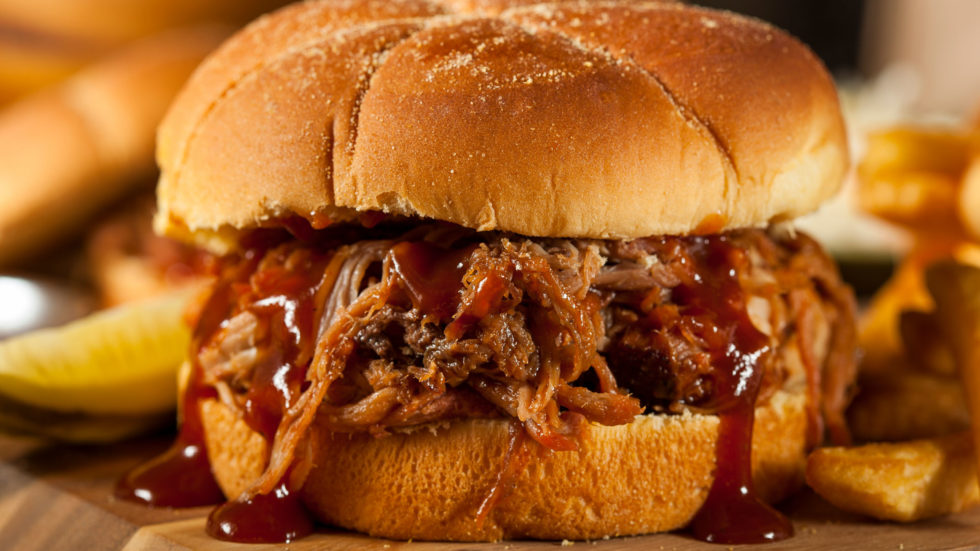
This easy barbecued beef recipe takes advantage of your traditional slow-cooker. It’s great for any cookout or potluck dinner. Chuck roast makes delicious shredded beef sandwiches. The recipe calls for ketchup however, you may substitute tomato paste for a slightly less sweet dish. In any case, this barbecued beef is sure to please your family.

What You Need

  • 3-pound boneless grass-fed Chuck roast
  • 1 ½ cups ketchup or tomato paste
  • 2 tablespoons Dijon style mustard
  • ¼ cup red wine vinegar
  • 2 tablespoons Worcestershire sauce
  • ½ teaspoon salt
  • ¼ teaspoon pepper
  • 1 clove garlic, diced

What to Do

  1. Place chuck roast in your slow-cooker.
  2. Combine remaining ingredients in mixing bowl to make sauce. Pour mixture over Chuck roast.
  3. Cover and cook on low 8 to 10 hours or 4 to 5 hours on high.
  4. Remove roast from slow-cooker and shred meat with a fork. Place shredded meat back into the slow-cooker and stir to evenly coat with sauce.
  5. Serve alone or atop whole-grain sandwich buns and top with additional barbecue sauce if desired.

Notes

If you like your meat a touch sweeter, add a tablespoon or two of date sugar while it is still hot to allow it to dissolve.

Final Thoughts

That’s it for today’s podcast. I hope you enjoyed our homestead updates. We love sharing our life with you.

Traditional cooking from scratch doesn’t have to be hard or time-consuming. So, fire up that Instapot or dig out your old, faithful slow-cooker and give that barbecued beef recipe a try.

If you enjoyed this podcast, please hop over to Apple Podcasts, SUBSCRIBE and give me a 5-star rating and review. And the absolute best thing you can do to help out the show is to share it with any friends or family who might be interested in our content.

As always, I’m here to help you “taste the traditional touch.”

Thank you so much for stopping by the homestead and until next time, may God fill your life with grace and peace.

Recipe Link

Easy Barbecued Beef

To share your thoughts:

  • Leave a comment on our Facebook Page
  • Share this show on Twitter, Facebook and Instagram

To help the show:

Website

www.peacefulheartfarm.com

Patreon

www.patreon.com/peacefulheartfarm

Facebook

www.facebook.com/peacefulheartfarm

Instagram

www.instagram.com/peacefulheartfarm/

Easy Barbecued Beef

Easy Barbecued Beef

This easy barbecued beef recipe takes advantage of your traditional slow-cooker. It’s great for any cookout or potluck dinner. Chuck roast makes delicious shredded beef sandwiches. The recipe calls for ketchup however, you may substitute tomato paste for a slightly less sweet dish. In any case, this barbecued beef is sure to please your family.

Ingredients

  • 3- pound boneless grass-fed chuck roast
  • 1 ½ cups ketchup or tomato paste
  • 2 tablespoons Dijon style mustard
  • ¼ cup red wine vinegar
  • 2 tablespoons Worcestershire sauce
  • ½ teaspoon salt
  • ¼ teaspoon pepper
  • 1 clove garlic diced

Instructions

  • Place chuck roast in your slow-cooker.
  • Combine remaining ingredients in mixing bowl to make sauce. Pour mixture over Chuck roast.
  • Cover and cook on low 8 to 10 hours or 4 to 5 hours on high.
  • Remove roast from slow-cooker and shred meat with a fork. Place shredded meat back into the slow-cooker and stir to evenly coat with sauce.
  • Serve alone or atop whole-grain sandwich buns and top with additional barbecue sauce if desired.

Notes

If you like your meat a touch sweeter, add a tablespoon or two of date sugar while it is still hot to allow it to dissolve.

This Week at Peaceful Heart Farm: 12-26-19

Hello beautiful people,

Hope you had a wonderful Christmas. And here’s wishing you a very Happy New Year as well. I’ve followed through on making broth and canning it. The extra meat is going into a wonderful stew for the women staying at the homeless shelter tonight. It included lots of broth and lots of our canned vegetables. It is seasoned just right (smileIMO smile). There will be fresh baked bread and chocolate cupcakes.

Scott still has a lot of wood to gather for winter wood stove heating, but at the moment he is out there in the creamery under construction building the roof. The first step was to put down the attic floor. That gives him a platform to build the rafters. He is such a great builder. I wish you could see up close the wonderful job he is doing. 

We named the new heifer Luna and she is doing great. The bull and a couple of steers are back out in the front pasture, separated from the girls. Cow breeding is done. The choice was because we did not want to breed Cloud yet. After giving birth to Luna, Cloud will come back into heat again in the next week or so and thus the decision to remove the bull. She will be bred via AI along with the rest of the girls in the beginning of summer 2020. We have received our tank for storing semen. Scott has found a resource for charging it up and we will be receiving our choice of bull semen in the very near future.  

I have a couple of herd shares coming up so if you are on the waiting list, look for an email from me this week. If you are not already signed up, but please send me an email and get on our waiting list. I will have more shares available in the spring.

Please go HERE to learn all about Herd Shares and get on our waiting list.

This week is the last pickup for yogurt. We have lots of cheese and look forward to serving your cheese needs throughout the next 4 months until we once again have fresh milk and fresh milk products. 

As a reminder, those of you that shop the Independence Farmer’s Market can still place your orders for lamb, beef and goat via the online market. We now have lamb available in 1″ kabob chunks. It’s great for making Indian curry dishes. I’ll have a recipe printed for that by the end of next week.
Here is a link to the online store. Register for an account, place your order online and pick it up on Wednesday afternoon at Grayson Landscaping (next to the old court house). Email me if you don’t see what you are interested in purchasing. 


News This Week 

  • Products Available This Week
  • Let’s Get Together
  • This week’s FarmCast: “Popular Cheeses” Lots of good information on many cheeses. Types covered are hard, semi-hard, semi-soft and soft (fresh and ripened).
  • FREE Cheese tasting downloads
  • Most Recent Recipes – Queso Fresco was added.

Products Available to Herd Share Owners

Choose 1 per week 1/2 Share Whole Share
Butter 1/4 pound 1/2 pound
Ararat Legend 1/4 pound 1/2 pound
Peaceful Heart Gold 1/4 pound 1/2 pound
Pinnacle 1/4 pound 1/2 pound
Clau d’ville Cheddar 1/4 pound 1/2 pound

Products Available to the General Public

Beef Price / Pound
1/4 Beef (approx 100 lbs) $7.00
1/2 Beef (approx 200 lbs) $6.50
Whole Beef (approx 400 lbs) $6.00
Ground (approx 1 lb) $7.00
Marrow Bones (approx 2 lbs) $2.00
Lamb Price / Pound
Lamb Loin Chops $16
Lamb Rib Chips $16
Lamb Kabobs $12
Ground Lamb (approx 1 lb) $10
Lamb Soup Bones (approx 1 lb) $3
Whole Lamb (approx 40 lbs) $9.50
1/2 Lamb (approx 20 lbs) $10
Chev (Goat) Price / Pound
Ground Chev (approx 1 lb) $12
Meaty Goat Bones (approx 1 lb) $3
Meaty Goat Bones (approx 10 lb) Ask about discount

Let’s Get Together

As always, we’d love to meet you in person.  This Saturday is the last December market. Hours are 10 am to 2 pm for this great market day. We will continue twice monthly through the month of April.  The Winter Market hours are 10 am to noon on the 2nd and 4th Saturdays of each month. 

As always, you may visit us at our dairy farm in Claudville, Virginia Tuesdays from 10 am to 12 noon and Saturday afternoons from 3 pm to 5 pm. Find out how we raise our animals and why you will love the taste of tradition that is inherent in all of our products. Herd share holders will be able to see up close how their cows are cared for and where the cheese is made and stored. 


Peaceful Heart FarmCast

This week’s podcast, Popular Cheeses, provides some great information about all kinds of cheeses. Cheese types include: Hard, semi-hard, semi-soft, soft (fresh and ripened). There is too much to do more than a brief overview. If you want more, see my podcasts The Taste of Cheese and The Basics of Cheesemaking

Listen to “Popular Cheeses” here.


Free Downloads

I want to follow up on a previous FarmCast, The Taste of Cheese where I talked about developing your expertise with using descriptive words. The FREE downloads of Classifying Cheese by Type and Category and Expand Your Cheese Vocabulary are still available at our website. Please stop by and get your FREE resources. 

You can LISTEN TO THE PODCAST HEREOr, if you have an Alexa device, just say:Alexa, play podcast Peaceful Heart FarmCast.

And don’t miss an episode! Subscribe to the Peaceful Heart Farm podcast on Apple PodcastsAndroidTuneIn, Stitcher or Spotify


Recent Recipes

Click the links and check them out. All of my recipes are printable.

chocolate peanut butter protein shakeQueso Fresco: Want to make queso fresco at home? Here is an easy recipe to make this homemade cheese that is a popular topping for tacos, nachos, enchiladas and tostadas. Many Latin foods use this ingredient and it is so easy.

crème fraîcheCrème Fraîche: Crème fraîche is similar to sour cream. While sour cream and crème fraîche are both used to add richness and tangy flavor, they are not the same thing. And is it worth taking the extra time to make your own crème fraîche? I’m going to say absolutely, yes, depending on the use.

vanilla cream cheesecake fat bombVanilla Cream Cheesecake Fat Bombs: A word of caution to anyone not living the keto lifestyle. If you are primarily burning carbohydrates and just add a lot fat such as in these luscious fat bombs, you will not induce ketosis and you will likely put on weight. There is a science to it. Ketosis first, then fat bombs for fun.

These delicious vanilla cheesecake fat bombs are high on taste and will give you a long-lasting boost of energy. They are deliciously creamy and taste just like cheesecake.

lamb chops with reduction sauceLamb Chops with Balsamic Reduction Sauce: This recipe for lamb chops is a favorite on our homestead. The title sound fancy but it is an easy and quick recipe for two people (we eat two chops each). Rosemary, basil and thyme give it great flavor.

This Week at Peaceful Heart Farm: 12-11-19

Hello beautiful people,

We are doing well here on the homestead. Hope you are as well. Not much going on here. I’m enjoying a little down time. Winter (well almost winter) is the time to catch up on things that have been put on the back burner. Specifically, I’m going to start making broth and canning it. I use a lot of it in stews. Broth is a great nutrient dense food.

Scott is out today (and yesterday and the day before and the day before . . . ) repairing fence and gathering wood. We’ve finally cranked up the wood stove. We will be using much less central heat. The electric bill will temporarily go down. Yay. 

Our new heifer is doing great. All of the cows are doing well. The ram got to go visit the ewes. He started to work immediately. Literally, within 3 minutes. I’ve calculated that our first lamb is due on May 6th 2020. We may have as many as 14 new lambs next year. I am using a significant portion of our protein resources to help feed the homeless. One of our church ministries is supporting an overflow homeless shelter during the winter months. I will be providing an evening meal for up to 30 homeless women at least 2, and up to 4 times, per month from now until the end of March 2020. It is a fantastic way for us to give back to the world.  

Our herd shares are sold out, but please get on our mailing list. I will have more available in the spring.

Please go HERE to learn all about Herd Shares and get on our waiting list.

We are out of fresh milk and yogurt. We have lots of cheese and look forward to serving your cheese needs throughout the next 4 months until we once again have fresh milk and fresh milk products. Our farmhouse cheddar past the taste test and lots of you really like it. It’s still pretty mild and will only get better with time. We still have Peaceful Heart Gold and Ararat Legend as well as that very popular Pinnacle available for herd share owners.   

As a reminder, those of you that shop the Independence Farmer’s Market can still place your orders for lamb, beef and goat via the online market. Here is a link to the online store. Register for an account, place your order online and pick it up on Wednesday afternoon at Grayson Landscaping (next to the old court house). Email me if you don’t see what you are looking for and place your order now for holiday “leg of lamb.” Now taking pre-orders via email. 


News This Week

  • Products Available This Week
  • Let’s Get Together
  • This week’s FarmCast: “Popular Cheeses” Lots of good information on many cheeses. Types covered are hard, semi-hard, semi-soft and soft (fresh and ripened).
  • FREE Cheese tasting downloads
  • Most Recent Recipes – Queso Fresco was added.

Products Available to Herd Share Owners

Choose 1 per week 1/2 Share Whole Share
Butter 1/4 pound 1/2 pound
Ararat Legend 1/4 pound 1/2 pound
Peaceful Heart Gold 1/4 pound 1/2 pound
Pinnacle 1/4 pound 1/2 pound
Clau d’ville Cheddar 1/4 pound 1/2 pound


Products Available to the General Public

Beef Price / Pound
1/4 Beef (approx 100 lbs) $7.00
1/2 Beef (approx 200 lbs) $6.50
Whole Beef (approx 400 lbs) $6.00
Ground (approx 1 lb) $7.00
Marrow Bones (approx 2 lbs) $2.00
Lamb Price / Pound
1/2 Lamb (approx 20 lbs) $10
Whole Lamb (approx 40 lbs) $9.50
Ground Lamb (approx 1 lb) $10
Lamb Soup Bones (approx 1 lb) $3
Chev (Goat) Price / Pound
Ground Chev (approx 1 lb) $12
Meaty Goat Bones (approx 1 lb) $3
Meaty Goat Bones (approx 10 lb) Ask about discount

Let’s Get Together

As always, we’d love to meet you in person.  This week is the second Christmas market,  December 14th. Hours are 10 am to 2 pm for this great market day. Then we continue twice monthly through the winter.  The Winter Market hours are 10 am to noon on the 2nd and 4th Saturdays of the month – Now through April. 

As always, you may visit us at our dairy farm in Claudville, Virginia Tuesdays from 10 am to 12 noon and Saturday afternoons from 3 pm to 5 pm. Find out how we raise our animals and why you will love the taste of tradition that is inherent in all of our products. Herd share holders will be able to see up close how their cows are cared for and where the cheese is made and stored. 


Peaceful Heart FarmCast

 This week’s podcast, Popular Cheeses, provides some great information about all kinds of cheeses. Cheese types include: Hard, semi-hard, semi-soft, soft (fresh and ripened). There is too much to do more than a brief overview. If you want more, see my podcasts The Taste of Cheese and The Basics of Cheesemaking

Listen to “Popular Cheeses” here.


Free Downloads

I want to follow up on a previous FarmCast, The Taste of Cheese where I talked about developing your expertise with using descriptive words. The FREE downloads of Classifying Cheese by Type and Category and Expand Your Cheese Vocabulary are still available at our website. Please stop by and get your FREE resources. 

You can LISTEN TO THE PODCAST HEREOr, if you have an Alexa device, just say:Alexa, play podcast Peaceful Heart FarmCast.

And don’t miss an episode! Subscribe to the Peaceful Heart Farm podcast on Apple PodcastsAndroidTuneIn, Stitcher or Spotify


Recent Recipes

Click the links and check them out. All of my recipes are printable.

chocolate peanut butter protein shakeQueso Fresco: Want to make queso fresco at home? Here is an easy recipe to make this homemade cheese that is a popular topping for tacos, nachos, enchiladas and tostadas. Many Latin foods use this ingredient and it is so easy.

crème fraîcheCrème Fraîche: Crème fraîche is similar to sour cream. While sour cream and crème fraîche are both used to add richness and tangy flavor, they are not the same thing. And is it worth taking the extra time to make your own crème fraîche? I’m going to say absolutely, yes, depending on the use.

vanilla cream cheesecake fat bombVanilla Cream Cheesecake Fat Bombs: A word of caution to anyone not living the keto lifestyle. If you are primarily burning carbohydrates and just add a lot fat such as in these luscious fat bombs, you will not induce ketosis and you will likely put on weight. There is a science to it. Ketosis first, then fat bombs for fun.

These delicious vanilla cheesecake fat bombs are high on taste and will give you a long-lasting boost of energy. They are deliciously creamy and taste just like cheesecake.

lamb chops with reduction sauceLamb Chops with Balsamic Reduction Sauce: This recipe for lamb chops is a favorite on our homestead. The title sound fancy but it is an easy and quick recipe for two people (we eat two chops each). Rosemary, basil and thyme give it great flavor.

You found our farm!

}

FARM STORE HOURS:

Tuesday and Wednesday:  10am – 12pm
Tuesday:  4pm – 6pm
Saturday:  by appointment

Peaceful Heart Farm

224 Cox Ridge Road, Claudville, VA 24076

Can you find our products?

We'd like to make sure we have cheese available where you can get it. Whether it be at the Farmers Market or a specialty food store.

Let us know where you'd like to see us and we'll try to make it happen. We'll notify you via email when we get our products to your favorite shopping destination.

11 + 7 =

}

FARM STORE HOURS:

Tuesday and Wednesday:  10am – 12pm
Tuesday:  4pm – 6pm

Saturday:  by appointment

}

Independence Farmers Market:

Fridays:  9am – 1pm (May thru October)
Fridays: 11am - 12pm (October thru April)

Never Miss an Update:

We're crafting cheese. Just for YOU!

0

Your Cart